20 Actionable Hacks To Choosing A Reliable AI Stock Analysis Software
Top 10 Ways To Assess The User Experience And Interface Of Ai Platforms For Trading StocksThe User Interface (UI) and the User Experience (UX) of AI trading platforms that predict and analyze stocks are essential to ensuring usability, efficiency as well as overall satisfaction. Even the AI models are reliable, a poorly designed interface can hinder decision-making. Here are 10 top tips to evaluate the user interface on these platforms.
1. The user's ease of use as well as the user-friendlyness of the product is evaluated
Navigation: Ensure the platform is easy to navigate using easy-to-read menus, buttons and workflows.
Learning curve - Determine the speed with which users grasp the platform and comprehend it without extensive training.
Consistency: Seek out consistent patterns of design (e.g. buttons, color schemes etc.) throughout the entire platform.
2. Look for Customizability
Dashboard customization - Make sure that dashboards can be customized by users with relevant charts, metrics, and data.
Layout flexibility: The platform should let users change the layout, size, or even move widgets.
Themes and preference. Check to see if there are dark/light options or other preferences in the visual.
3. Visualize Data
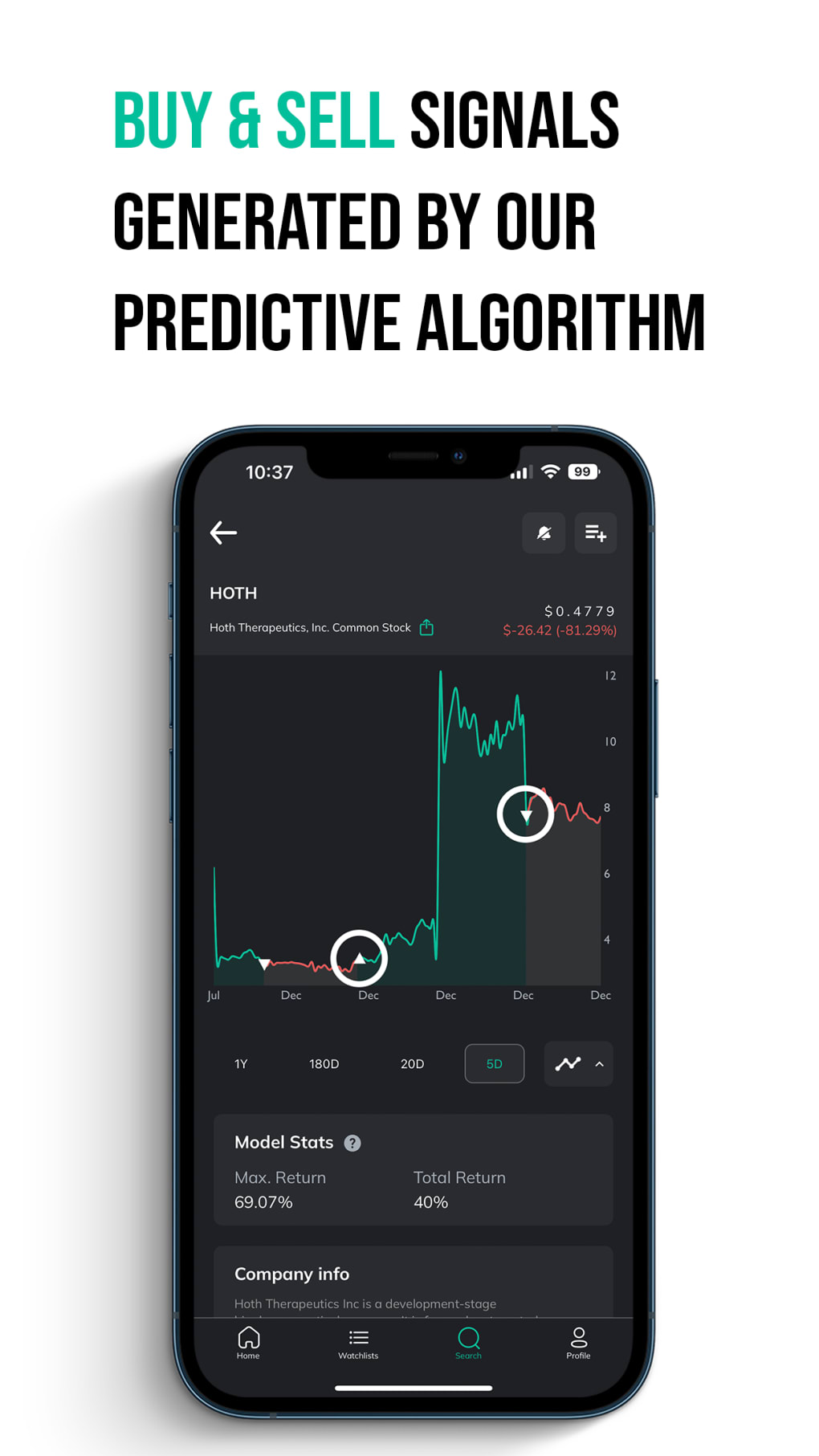
Chart quality: Ensure the website offers interactive charts of high quality (e.g. candlestick charts lines charts, etc.)) that include zoom and pan functions.
Visual clarity Ensure to ensure that all information is presented in a clear manner, including labels, legends and tips-offs.
Verify that the visualisations are updated real-time in order to reflect any change in the market.
4. Test Responses and Speed
Time to load: Ensure that your platform is loaded quickly, even if you are managing large amounts of data.
Performance in real-time Check that the platform can respond to data feeds in a flash without delays or lags.
Cross-device compatibility : Check if the platform is compatible with all devices (desktops mobiles, tablets, desktops).
5. Assess the accessibility
Mobile App: Make sure the platform has a mobile trading app with full functionality.
Keyboard shortcuts. Make sure that the platform is compatible with keyboard shortcuts.
Accessibility features: Verify if the platform complies with accessibility guidelines (e.g., screen reader support or high-contrast mode).
6. Use the Examine Search and Filtering Function to examine your information.
Search effectiveness: The platform should allow users to quickly search indexes, stocks and other assets.
Advanced filters: Discover if there are any filters that you can apply to the results.
Saved searches: Check whether you can save searches and filters that are frequently used.
7. Be sure to check for alerts and notifications.
Individually customizable alerts: Users may make alerts that are based on specific situations, such as price thresholds and spikes in volume and news events.
Delivery of notifications: Check whether notifications can be sent through multiple channels (e.g. email, SMS, app notifications).
Timeliness - Make sure whether alerts are sent out quickly and precisely.
8. Examine Integration with Other Tool
Integration of brokers is crucial to ensure smooth trade execution.
API access. Find out if the platform provides API access to advanced users to create custom workflows and tools.
Third-party platforms: Check to determine if your platform is able to integrate with other applications (such as Excel Google Sheets, or trading bots).
9. Assess Help and Support Features
Tutorials on Onboarding. Find out if new users are able to access tutorials.
Help center. Make sure your platform is equipped with a comprehensive help center.
Customer service: Check to find out if the platform has prompt customer service.
10. Test to determine if Overall User Satisfaction is met
Feedback from users review and testimonials of studies to assess the level of satisfaction overall with UI/UX.
Trial period - Get to know the platform with a no-cost trial to see what it can do.
Error handling: Check how the platform handles errors and edge instances (e.g. incorrect inputs and downtime of servers).
Bonus Tips:
Aesthetics: While functionality is key visual appeal, an appealing design can greatly enhance the overall experience for users.
Performance under stress - test the platform's stability and responsiveness in markets with high volatility.
Forums and community: Find out if the platform provides an online community or forum that allows users to discuss feedback and tips.
Use these suggestions and you will be able to evaluate the UX/UI of AI-based stock prediction/analysis trading platforms. They will be user-friendly efficient, and effective, and will also meet your needs in trading. A good UI/UX can be an extremely effective tool that can help you make more informed decisions and make better trades. Check out the top ai stocks to buy now for more recommendations including best stocks for ai, stock market online, best ai stocks to buy, investing in a stock, stock trends, playing stocks, ai stock picker, ai stock picker, stock market ai, trade ai and more.
Top 10 Tips On How To Evaluate The Scalability Ai Trading Platforms
It is important to assess the performance and scalability of AI-driven trading and stock forecasting platforms. This will guarantee that they are able to cope with the increasing volume of data in addition to market complexity and user demands. Here are 10 top tips to determine scalability.
1. Evaluate Data Handling Capacity
Check to see if your platform is able to analyze and process large datasets.
Why: Scalable platforms need to handle increasing data volumes without compromising performance.
2. Test the Real-Time Processing Capabilities of your processor
Tips: Make sure you check the capability of the platform to process real-time information streams, such live stock prices or breaking news stories.
What is the reason? Trading decisions that are real-time require analysis of data in real-time. In the event of delays, it could result in missed opportunities.
3. Cloud Infrastructure and Elasticity
Tip. Check if the platform is using cloud-based infrastructure such as AWS, Google Cloud and Azure that can scale resources on demand.
Cloud-based platforms are a great way to gain the flexibility. They allow the system to scale down according to demand.
4. Evaluate Algorithm Efficiency
TIP: Check the computational efficacy (e.g. deep learning, reinforcement learning) of the AI models used for prediction.
Why? Complex algorithms are resource-intensive. Optimizing them to ensure they are scalable is essential.
5. Examine Distributed and Parallel Computing
TIP: Make sure to check whether the platform is using the frameworks of parallel processing or distributed computing frameworks.
The reason: These advanced technologies offer faster data analysis and processing on multiple nodes.
Examine API Integration, and Interoperability
Check out the platform's integration capabilities by using APIs from outside.
Why? Seamless integration allows the platform to be adapted to new trading environments as well as data sources.
7. Analyze User Load Handling
Tip: Simulate high user traffic to test how the platform does under pressure.
Why: A scalable platform will provide performance even when the amount of users increase.
8. Assess the effectiveness of Model Retraining and Adaptability
Tips Check how often the AI models can be retrained with new data.
Why: Markets evolve, and models need to be able to adapt rapidly to keep their the accuracy.
9. Examine for fault tolerance and Redundancy
Tip: Ensure the platform has failover mechanisms and redundancy for hardware or software failures.
Why: Downtime is costly for trading. Therefore, fault tolerance is crucial to the scalability.
10. Monitor Cost Efficiency
Analyze your platform's cost that includes cloud's storage, cloud resources and computation power.
Why is it important to maintain a healthy equilibrium between the performance costs and expenses.
Bonus tip Future-proofing
Check that the platform has been designed to incorporate emerging technologies (e.g. quantum computing or advanced NLP) and to adapt to changes in the regulatory environment.
These aspects can help you assess the potential of AI-based stock prediction and trading platforms. They'll also be sure they're reliable efficient, reliable and ready to expand, and are future-proof. View the best ai for trading stocks examples for blog advice including ai stock analysis, ai share trading, best stock prediction website, ai stock predictions, ai stock analysis, stock trading ai, stock predictor, best ai stocks to buy now, ai stock price prediction, ai stock price prediction and more.
